




As a software engineer, I see my work as foundational to the trust that clients and communities place in Acclinate. Partners rely on our platform to decide how and where to engage underrepresented communities in clinical research, and that responsibility extends far beyond uptime. Reliability means preventing the downstream harm that can come from insights built on incomplete or inadequate data, such as poorer health outcomes across all populations.
People trust healthcare systems to protect them, and our job is to ensure the digital infrastructure behind that trust is built with precision and integrity. At Acclinate, engineering excellence means designing systems that give those working toward health equity the confidence to act on the data in front of them.
Building Healthcare Technology Systems That Last
My engineering philosophy centers around building robust and reliable solutions. I prefer stable, dependable code over code that's clever. When I design a background service to pull data from an external API, I want to know it will complete successfully every single time. When something doesn't go right, I want to know we can reliably retrieve all missing information. Flashy code and systems might look elegant on the surface, but reliability comes from predictability, not novel solutions.
I also build with adaptability in mind. When ingesting data from an external source, I often pull in more than we currently need and store it in a one-to-one record that mirrors the source system. Using Google Analytics as an example, we might only need a few metrics today, but by capturing the broader dataset (within reason), we’re prepared to pivot quickly when needs change.
My larger philosophy is simple: I don't want to be right, I want to get it right to get it right and design for evolution. By maintaining a clear “source of truth,” we can trace issues, correct errors quickly, and adjust seamlessly when requirements change. It’s a framework for building software that improves with time rather than breaking under it. That’s what I mean by engineering excellence—writing code that anticipates growth, not just change.
Protecting Health Data, Protecting Trust
Much of our work at Acclinate involves sensitive, personally identifiable information gathered during community outreach, education, and connection. From the moment data enters our system, it’s treated as private by default. Internal access remains tightly restricted, and even during demonstrations or screen shares, the data stays hidden or obfuscated.
Our systems include multiple layers of protection that make it very difficult to make mistakes. An authorized user would have to override several safeguards to reveal private data, preventing accidental exposure.
Our design philosophy isn't about a compliance checkbox. Every safeguard reflects our respect for the communities we serve and for the partners who trust us with their information.
“I don't want to be right, I want to get it right.”
Automating the Repetitive, Amplifying the Human
I’ve always despised repetitive work and monotonous tasks. They drag down skilled teams. That's where AI becomes a valuable contributor and saves hours of time.
For instance, our community engagement staff produce a wide range of educational content—videos, reels, blog posts, and more. Instead of asking someone to manually summarize that material, we use AI to create concise summaries automatically. This shift frees our people to focus on connection, creativity, and decision-making that advances health equity.
We’ve also applied AI to pattern recognition and transcription. One of our recent projects introduced mobile-first tooling that allows staff to photograph completed paper surveys, which are vital for understanding communities' needs. The images upload directly to our servers from a phone (handled securely and never stored locally), and AI extracts responses into the database. The interface is intentionally simple, designed for people working in the field—the "boots on the ground" who need tools that move as fast as they do.
That project came together in just over a week, and it closed a major gap in how we process data. Now, every survey—digital or physical—feeds insights directly into our system. It’s a small example of how thoughtful engineering can make human work more meaningful.
As AI becomes more capable, our responsibility as engineers grows too. It’s not enough for automation to work—it has to work ethically, securely, and transparently. I believe in using AI to extend human potential, not replace it, and that means building systems that support human judgment at every step.
Engineering for What Comes Next
Adaptability is built into every one of our designs and systems. Recently, we partnered with our data team to implement a centralized data pipeline using n8n and BigQuery. This single pipeline manages all data ingress across the company, simplifying maintenance, improving consistency, and allowing teams to operate from one companywide source of truth rather than completing jobs across multiple systems and making API calls to several sources.
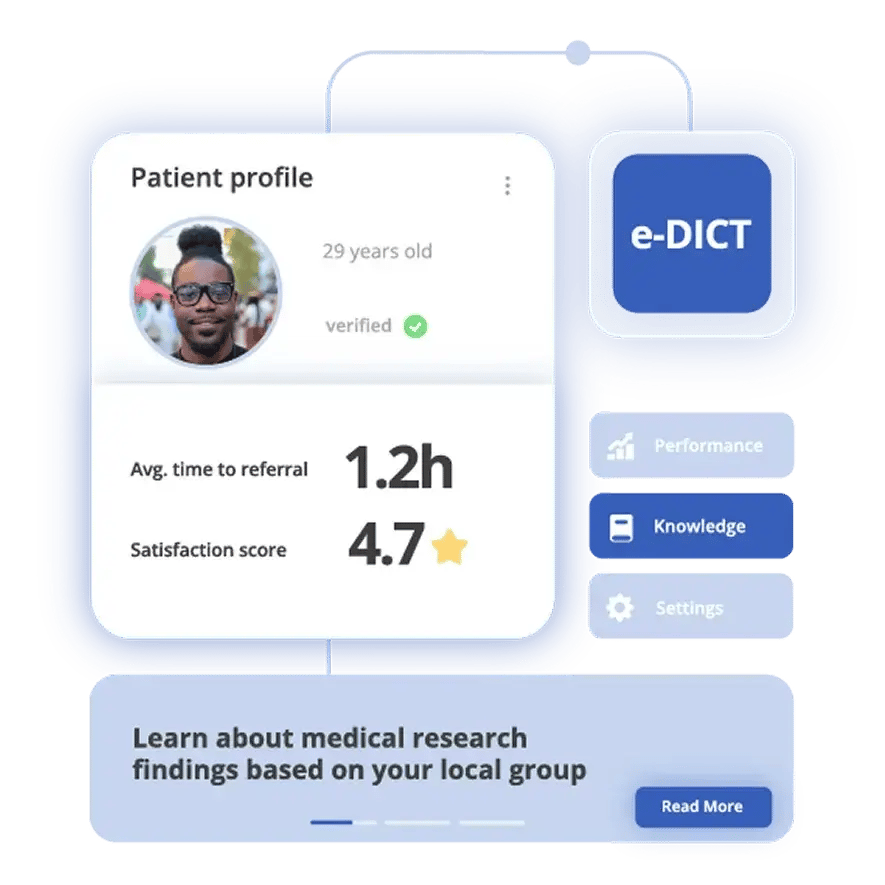
We’re also updating our B2B platform, eDICT, with standardized tooling and reusable view components. This will allow our team to work quickly, stay consistent, and focus on solving meaningful problems. When new systems are required or we need to change directions, we can iterate quickly and invest our energy where it counts: delivering high-quality and valuable features.
Looking ahead, it's a safe assumption that AI and automation will become even more deeply integrated into how we work and what we build. The goal isn't to replace human judgment but to enhance it. Whether that's for ourselves as engineers, our internal teams, our communities, or our partners. The more we can make complex systems approachable, understandable, and useful, the more time we can invest into meeting people where they are and helping them go forward.
Engineering excellence comes down to one simple idea: build systems that earn trust. Whether focusing on data integrity, security, or scalability, our work should always strengthen the connection between technology and the people it serves. That’s how we build not only software that lasts, but progress that does too.
Ready to learn more about our approach to health tech development? Schedule a 1:1 with our team.